Showing posts with label Housing Market Updates. Show all posts

How Property Taxes Can Impact Your Mortgage Payment

How Property Taxes Can Impact Your Mortgage Payment | Simplifying The Market

When buying a home, taxes are one of the expenses that can make a significant difference in your monthly payment. Do you know how much you might pay for property taxes in your state or local area?

When applying for a mortgage, you’ll see one of two acronyms in your paperwork – P&I or PITI – depending on how you’re including your taxes in your mortgage payment.

P&I stand for Principal and Interest, and both are parts of your monthly mortgage payment that go toward paying off the loan you borrow. PITI stands for Principal, Interest, Taxes, and Insurance, and they’re all important factors to calculate when you want to determine exactly what the cost of your new home will be.

TaxRates.org defines property taxes as,

“A municipal tax levied by counties, cities, or special tax districts on most types of real estate – including homes, businesses, and parcels of land. The amount of property tax owed depends on the appraised fair market value of the property, as determined by the property tax assessor.”

This organization also provides a map showing annual property taxes by state (including the District of Columbia), from lowest to highest, as a percentage of median home value.How Property Taxes Can Impact Your Mortgage Payment | Simplifying The MarketThe top 5 states with the highest median property taxes are New Jersey, New Hampshire, Texas, Nebraska, and Wisconsin. The states with the lowest median property taxes are Louisiana, Hawaii, Alabama, and Delaware, followed by the District of Columbia.

Bottom Line

Depending on where you live, property taxes can have a big impact on your monthly payment. To make sure your estimated taxes will fall within your desired budget, let’s get together today to determine how the neighborhood or area you choose can make a difference in your overall costs when buying a home.

Content previously posted on Keeping Current Matters

The post How Property Taxes Can Impact Your Mortgage Payment appeared first on Kelly Right.

https://ift.tt/2PN4bCx

A Recession Does Not Equal a Housing Crisis [INFOGRAPHIC]

A Recession Does Not Equal a Housing Crisis [INFOGRAPHIC] | Simplifying The Market

A Recession Does Not Equal a Housing Crisis [INFOGRAPHIC] | Simplifying The Market

Some Highlights:

  • There is plenty of talk in the media about a pending economic slowdown.
  • The good news is, home values actually increased in 3 of the last 5 U.S. recessions, and decreased by less than 2% in the 4th.
  • Many experts predict a potential recession is on the horizon. However, housing will not be the trigger, and home values will still continue to appreciate. It will not be a repeat of the crash in the 2008 housing market.

Content previously posted on Keeping Current Matters

The post A Recession Does Not Equal a Housing Crisis [INFOGRAPHIC] appeared first on Kelly Right.

https://ift.tt/2zYAnb6

iBuyers: What Is the “Cost of Convenience” When Selling Your Home?

iBuyers: What Is the “Cost of Convenience” When Selling Your Home? | Simplifying The Market

When thinking about selling their house, homeowners have many options. A relatively new option is using an “iBuyer.” What is an iBuyer?

According to Jovio, the definition is:

“A company or investor that uses Automated Valuation Models (AVMs) to make instant offers on homes. It allows sellers to close on a property quickly. Once sold, the company then turns around and resells the home for a profit.”

Today, there are many iBuyer companies such as OfferPad, Zillow Offers, Knock, Opendoor, and Perch. Even some more traditional companies offer the same or similar services (ex. Keller Williams, Redfin, Realogy). Ivy Zelman reported in her ‘Z’ Report that some traditional brokers are partnering with some of the larger iBuyers too:

“Keller Williams announced a partnership with Offerpad, aligning the largest franchise-based brokerage brand in the U.S. with the five-year-old iBuyer. The move follows Realogy’s partnership with Home Partners of America last year as an established brokerage player more directly providing an iBuyer alternative…

Likewise, in early July, Redfin and Opendoor announced a partnership, starting in Phoenix and Atlanta – aligning interests of the 13-year old, tech-enabled and value-focused brokerage with the largest and longest-standing iBuyer. Outside of these larger scale alliances, Zillow’s strategy has been to work with local brokerages as partners on a market-by-market basis.”

Does it make sense to sell your home to an iBuyer?

It depends. Collateral Analytics recently released a study which revealed the advantages and disadvantages of using an iBuyer. According to the study, if the homeowner is looking for the convenience of a quick sale with less uncertainty, using an iBuyer may make sense.

“iBuyers offer quicker closings for sellers who would like to avoid the uncertainty of knowing when and if their home will sell. For motivated sellers who want a predictable sale date and need to move, perhaps a long distance from the current location, there is no question that iBuyers have provided a welcome alternative to traditional brokerage.”

The study, however, also showed there is a cost for that convenience. Collateral Analytics explained:

“Traditional brokers fees generally range from 5% to 7% of the sales price…In addition to this cost, buyers typically pay some closing costs including lender related charges in the range of 1% to 3%.”

In contrast:

“iBuyers charge sellers a ‘convenience fee’ of 6% to 9.5%, some also charge the seller for fees typically paid by buyers at closing adding another 1% or more. Most iBuyers will inspect the home, assess a generous home repair allowance and negotiate a (an additional) credit to handle such repairs…Overall the total direct costs, ignoring repair credits, will run 7% to 10% for an iBuyer, versus the typical 5% to 9% combined seller and buyer costs with a traditional broker. Yet, that is not the end of the story or comparison.”

The study went on to explain how iBuyers need to charge even more because they have additional expenses beyond that of the traditional broker. They include:

  1. Carrying costs involving significant amounts of capital – The iBuyer must pay the expenses of the house between the time they purchase it and the time they sell it to a new buyer.
  2. Safeguarding the home risks – A home with an iBuyer ‘For Sale Sign’ alerts anyone passing that the house is vacant. The study suggests that these homes could become targets for vagrants and criminals.
  3. Adverse selection risks – The study explains that since iBuyers use computer models to determine their offer, they may be unaware of certain challenges in the neighborhood that could adversely impact the value.
  4. Potential home price declines – As the survey states:

“A downturn in home prices, not forecast by the iBuyer market analysts could be devastating as they ramp up their business platforms, particularly if the cost of capital increases. At the same time, downturns are precisely when the most sellers would want this option.”

Bottom Line

After taking a thorough look at the iBuyer platform, the study concludes that using an iBuyer is more expensive for the homeowner than the traditional brokerage model, but for some sellers, it may still make sense:

“These preliminary empirical results suggest that sellers are paying not just the difference in fees of 2% to 5% more than with traditional agencies, and a generous repair allowance, but another 3% to 5% or more to compensate the iBuyer for liquidity risks and carrying costs. In all, the typical cost to a seller appears to be in the range of 13% to 15% depending on the iBuyer vendor. For some sellers, needing to move or requiring quick extraction of equity, this is certainly worthwhile, but what percentage of the market will want this service remains to be seen.”

Content previously posted on Keeping Current Matters

The post iBuyers: What Is the “Cost of Convenience” When Selling Your Home? appeared first on Kelly Right.

https://ift.tt/2zTF723

Young First-Time Buyers Are Saving for Their Dream Homes

Young First-Time Buyers Are Saving for Their Dream Homes | Simplifying The Market

Young buyers (Millennials & Gen Z) have waited longer than previous generations to enter the housing market for their first home. However, this hasn’t stopped them from dreaming about the home they will eventually buy. Many spend hours searching listings and building Pinterest boards of their favorite home features.

According to a survey from Open Listings, 70% of single renters are more likely to spend their Sunday nights swiping through house listings than dating profiles.

All that time window shopping has led 45% of millennials to expect the first home they buy to be their “dream home”! They are willing to wait longer, save more for a larger down payment, and are pickier about the listings they want to tour and the features that they want to see in their first home.

Waiting a little longer to buy a home than their parents or grandparents did has also helped young buyers become more established in their careers prior to making such a large purchase. Lawrence Yun, NAR’s Chief Economist, recently commented,

“Older millennials are now entering the prime earning stages of their careers, and the size and costs of homes they purchase reflect this. Their choices are falling more in line with their Gen X and boomer counterparts.”

In some areas of the country, high competition in the starter home market forces young buyers to wait longer. The extra money they save during that time opens their search to bigger, more expensive homes.

If this trend continues, older millennials will skip the starter home altogether, going straight to a trade-up or premium home instead.

Bottom Line

If you are one of the many young renters planning on buying your first home soon, let’s get together to help determine what type of home will best suit your present and future needs.

Content previously posted on Keeping Current Matters

The post Young First-Time Buyers Are Saving for Their Dream Homes appeared first on Kelly Right.

https://ift.tt/30TJg1O

5 Reasons to Sell Your House This Summer

5 Reasons to Sell Your House This Summer | Simplifying The Market

Here are 5 compelling reasons listing your home for sale this summer makes sense.

1. Demand Is Strong

The latest Buyer Traffic Index from the National Association of Realtors (NAR) shows that buyer demand remains strong throughout the vast majority of the country. These buyers are ready, willing, and able to purchase… and are in the market right now! More often than not, multiple buyers are competing with each other for the same home.

Take advantage of the buyer activity currently in the market.

2. There Is Less Competition Now

Housing inventory is still under the 6-month supply needed for a normal housing market. This means that, in most of the country, there are not enough homes for sale to satisfy the number of buyers.

Historically, the average number of years a homeowner stayed in his or her home was six, but that number has hovered between nine and ten years since 2011. Many homeowners have a pent-up desire to move, as they were unable to sell over the last few years due to a negative equity situation. As home values continue to appreciate, more and more homeowners are granted the freedom to move.

Many homeowners were reluctant to list their home over the last couple of years for fear that they would not find a home to move in to. That is all changing now as more homes come to market at the higher end. The choices buyers have will continue to increase. Don’t wait until additional inventory comes to market before you to decide to sell.

3. The Process Will Be Quicker

Today’s competitive environment has forced buyers to do all they can to stand out from the crowd, including getting pre-approved for their mortgage financing. Buyers know exactly what they can afford before home shopping. This makes the entire selling process much faster and simpler. According to Ellie Mae’s latest Origination Insights Report, the time to close a loan has dropped to 43 days. (Last numbers available.)

4. There Will Never Be a Better Time to Move Up

If your next move will be into a premium or luxury home, now is the time to move up! The inventory of homes for sale at these higher price ranges has created a buyer’s market. This means that if you are planning on selling a starter or trade-up home, it will sell quickly, AND you’ll be able to find a premium home to call your own!

According to CoreLogic, prices are projected to appreciate by 4.8% over the next year. If you are moving to a higher-priced home, it will wind up costing you more in raw dollars (both in down payment and mortgage payment) if you wait.

5. It’s Time to Move on with Your Life

Look at the reason you decided to sell in the first place and determine whether it is worth waiting. Is money more important than being with family? Is money more important than having the freedom to go on with your life the way you think you should?

Only you know the answers to these questions. You have the power to take control of the situation by putting your home on the market. Perhaps the time has come for you and your family to start living the life you desire.

That is what is truly important.

Content previously posted on Keeping Current Matters

The post 5 Reasons to Sell Your House This Summer appeared first on Kelly Right.

https://ift.tt/2ZIgfbZ

Top 4 Renovations for the Greatest Return on Investment! [INFOGRAPHIC]

Top 4 Renovations for the Greatest Return on Investment! [INFOGRAPHIC] | Simplifying The Market

Top 4 Renovations for the Greatest Return on Investment! [INFOGRAPHIC] | Simplifying The Market

Some Highlights:

  • If you are planning on listing your house for sale this year, these four home improvement projects will net you the most Return on Investment (ROI).
  • Minor renovations can go a long way toward improving the quality of your everyday life and/or impressing potential buyers.
  • Whether you plan to stay in your house for a long time or just a few years, it’s smart to know which home renovations add the most value.

Content previously posted on Keeping Current Matters

The post Top 4 Renovations for the Greatest Return on Investment! [INFOGRAPHIC] appeared first on Kelly Right.

https://ift.tt/30WzE6p

Time for Your Dream Home, Gen X!

Time for Your Dream Home, Gen X! | Simplifying The Market

During the housing market crash, Gen X homeowners lost more wealth than other generations. However, things are changing now! A strong economy, increasing home prices, and the recovery of the housing market are helping this generation to regain their lost wealth.

According to Pew Research Center,

“Their fortunes have rebounded more than those of other generations during the post-recession economic expansion and as home and stock prices have risen. Since 2010, the median net worth of Gen X households has risen 115%. In fact, in 2016, the most recent year with available data, the net worth of a typical Gen X household had surpassed what it was in 2007 ($84,200 vs. $63,400)”.

The same report also mentioned,

“15% of Gen X’s homeowners were ‘underwater’ on their homes in 2010 (meaning they owed more than they owned). By 2016 only 3% were underwater.”

As a result of homes regaining market value and their increasing net worth, many Gen Xers are presented with the opportunity of selling their current home in order to move up to the house they always dreamed of!

According to the 2019 Home Buyers and Sellers Generational Trends Report by the National Associations of Realtors, in 2018 Gen Xers made up the second largest share of home buyers by generation at 24%.

The report also provided some highlights about their purchase:

  • Greatest share that purchased a multi-generational home (16%).
  • Largest share that purchased a detached single-family home (88%).
  • Highest median household income ($111,100).
  • Bought the most expensive homes of all the generations.
  • Job-related relocation was identified as the primary reason to buy.

But this generation is not only buying- they are selling too!

  • Largest share of home sellers (25%).
  • Highest median household income among sellers ($123,6000).
  • Tenure in the previous home was a median of 9 years.
  • House too small was indicated as the primary reason to sell.
  • 91% sold the home using a real estate professional.

Bottom Line

If you are a Gen Xer who would like to know exactly how much your house is worth today so you can move up to the home of your dreams, let’s get together to analyze your current circumstances.

Content previously posted on Keeping Current Matters

The post Time for Your Dream Home, Gen X! appeared first on Kelly Right.

https://ift.tt/2ZHdLdS

3 Things to Know in the Housing Market Today!

3 Things to Know in the Housing Market Today! | Simplifying The Market

A lot is happening in the world, and it’s having a direct impact on the housing market. The reality is this: some of it is positive and some of it may be negative. Some we just don’t know yet.

The following three areas of the housing market are critical to understand: interest rates, building materials, and the outlook for an economic slowdown.

1. Interest Rates

One of the most important things to consider when buying a home is the interest rate you will be charged to borrow the money. In our recent post we posed the question, “Are Low Interest Rates Here To Stay?” The latest information from Freddie Mac makes it appear they are. We are currently at a 21-month low in interest rates.3 Things to Know in the Housing Market Today! | Simplifying The Market2. Building Materials

Talk of tariffs could also affect the housing market. According to a recent article, the National Association of Home Builders reports that as much as $10 billion in goods imported from China are used in homebuilding. Depending on the outcome of the tariff and trade discussions between several countries, there could be as much as a 25% boost in the cost of building materials.

3. Economic Slowdown

In a prior blog post on this topic, we began the year with many economic leaders thinking we could expect a recession in late 2019 or early 2020. As spring approached, we reported that economists had started to push that projection past 2020.  Now, three leading surveys indicate that it may begin in the next eighteen months.3 Things to Know in the Housing Market Today! | Simplifying The Market

Bottom Line

We are in a strong housing market. Wages are increasing, home prices are appreciating, and mortgage rates are the lowest they have been in 21 months.  Whether you are thinking of buying or selling, it’s a great time to be in the market.

Content previously posted on Keeping Current Matters

The post 3 Things to Know in the Housing Market Today! appeared first on Kelly Right.

https://ift.tt/30Uz2hu

Renting or Owning, What Is Better for You?

¬Renting or Owning, What Is Better for You? | Simplifying The Market

In a real estate market where home prices are rising, many have begun to reexamine the idea of buying a home, choosing instead, to rent for a while. But often, there is a dilemma: should you keep paying rent, knowing that rent is rising too, or should you lock in your housing cost and buy a home?

Let’s look at both scenarios and analyze the pros and cons of each:

Renting

With the housing market crash in 2008, many homeowners lost their homes and became renters. According to Iproperty Management, “the number of households renting their home … rose from 31.2% of households in 2006 to 36.6% in 2016”.

Some choose to rent because it is more convenient for their lifestyle. Those whose job requires frequent moves need the flexibility that a 6-12 month lease agreement gives them so they can move to their next assignment!

Many renters believe that renting is cheaper because they do not have to pay for maintenance and repairs. (Not true! Landlords work those expenses into your rent and other fees). Another reason many rent is that they feel like they cannot afford the down payment and closing costs required to buy a house, due to their inability to save much after paying their monthly expenses.

That can be true! Nearly 1 in 4 renters spend at least half their household income on rent. In 2017 the “severely” burdened renters’ rate was 24.7% with 24.9% reporting they were “moderately” burdened.

Renting also brings some financial disadvantages. Homeowners can take advantage of tax deductions that let them claim their property taxes and mortgage interest. Additionally, there is a big risk that your rent will go up every time you renew your lease, as we know the median asking rent has been increased steadily since 1988!Renting or Owning, What Is Better for You? | Simplifying The MarketOne of the major challenges with renting is that you don’t have a space to call your own. When you rent, you are paying your landlord’s mortgage, and therefore they are the beneficiaries of the equity gained from paying that mortgage.

Now let’s explore the other side: Homeownership

In the past, we have mentioned the many financial and non-financial benefits of becoming a homeowner. So, let’s just focus on the one big difference between renting and owning, the ability to lock in your housing cost!

Assuming you will have a fixed-rate mortgage, your costs are predictable! You will know exactly what your mortgage payment will be for the next 15-30 years. The homeownership rate in 2018 was 64.4%, and has been on the rise. Those households locked in their housing cost rather than wait for their landlord to raise their rent again!

What are the disadvantages of owning a home? Well, it is a long-term financial commitment! It is not easy to pack quickly and move. You will need time and good planning to do it in a short amount of time.

You need to save your money! Getting a mortgage requires a down payment, closing costs, and moving expenses. Again, that will require some savings and planning!

Unless you have a homeowner’s association (HOA) (and you pay an HOA fee) or a home warranty, you will be responsible for maintenance and taking care of the home. This may range anywhere from regular landscaping to major repairs.

Bottom Line

Like everything in life, there are pros and cons. What is better for you depends on your situation! If you are interested in becoming a homeowner and want to discuss the pros and cons, let’s get together to help you review your current situation and answer any questions you may have!

Content previously posted on Keeping Current Matters

The post Renting or Owning, What Is Better for You? appeared first on Kelly Right.

https://ift.tt/2ZEmZaN

2 Myths Holding Back Home Buyers

2 Myths Holding Back Home Buyers | Simplifying The Market

Freddie Mac recently released a report entitled, “Perceptions of Down Payment Consumer Research.” Their research revealed that,

“For many prospective homebuyers, saving for a down payment is the largest barrier to achieving the goal of homeownership. Part of the challenge for those planning to purchase a home is their perception of how much they will need to save for the down payment…

…Based on our recent survey of individuals planning to purchase a home in the next three years, nearly a third think they need to put more than 20% down.”

Myth #1: “I Need a 20% Down Payment”

Buyers often overestimate the funds needed to qualify for a home loan. According to the same report:

22% of renters and 31% of homeowners believe lenders require 20% or more of a home’s sale price as a down payment for a typical mortgage today. And,

“If a 20% down payment was required, 70% of those who were planning to buy a home in the next three years said it would delay them from purchasing and nearly 30% indicated they would never be able to afford a home.”  

While many believe at least 20% down is necessary to buy the home of their dreams, they do not realize programs are available which permit as little as 3%. Many renters may actually be able to enter the housing market sooner than they ever imagined!

Myth #2: “I Need a 780 FICO® Score or Higher to Buy”

Many either don’t know or are misinformed concerning the FICO® score necessary to qualify, believing a ‘good’ credit score is 780 or higher.

To debunk this myth, let’s take a look at Ellie Mae’s latest Origination Insight Report, which focuses on recently closed (approved) loans.2 Myths Holding Back Home Buyers | Simplifying The MarketAs indicated in the chart above, 52.4% of approved mortgages had a credit score of 600-749.

Bottom Line

Whether buying your first home or moving up to your dream home, knowing your options will make the mortgage process easier. Your dream home may already be within your reach.

Content previously posted on Keeping Current Matters

The post 2 Myths Holding Back Home Buyers appeared first on Kelly Right.

https://ift.tt/30Uz0pS

What is the Cost of Waiting Until Next Year to Buy? [INFOGRAPHIC]

What is the Cost of Waiting Until Next Year to Buy? [INFOGRAPHIC] | Simplifying The Market

What is the Cost of Waiting Until Next Year to Buy? [INFOGRAPHIC] | Simplifying The Market

Some Highlights:

  • The “cost of waiting to buy” is defined as the additional funds necessary to buy a home if prices & interest rates were to increase over a period of time.
  • Freddie Mac forecasts interest rates to rise to 4.5% by the Q4 2020.
  • CoreLogic predicts home prices to appreciate by 4.8% over the next 12 months.
  • If you are ready and willing to buy your dream home, find out if you are able to!

Content previously posted on Keeping Current Matters

The post What is the Cost of Waiting Until Next Year to Buy? [INFOGRAPHIC] appeared first on Kelly Right.

https://ift.tt/2ZCvt2h

How Property Taxes Can Impact Your Mortgage Payment

How Property Taxes Can Impact Your Mortgage Payment | Simplifying The Market

When buying a home, taxes are one of the expenses that can make a significant difference in your monthly payment. Do you know how much you might pay for property taxes in your state or local area?

When applying for a mortgage, you’ll see one of two acronyms in your paperwork – P&I or PITI – depending on how you’re including your taxes in your mortgage payment.

P&I stand for Principal and Interest, and both are parts of your monthly mortgage payment that go toward paying off the loan you borrow. PITI stands for Principal, Interest, Taxes, and Insurance, and they’re all important factors to calculate when you want to determine exactly what the cost of your new home will be.

TaxRates.org defines property taxes as,

“A municipal tax levied by counties, cities, or special tax districts on most types of real estate – including homes, businesses, and parcels of land. The amount of property tax owed depends on the appraised fair market value of the property, as determined by the property tax assessor.”

This organization also provides a map showing annual property taxes by state (including the District of Columbia), from lowest to highest, as a percentage of median home value.How Property Taxes Can Impact Your Mortgage Payment | Simplifying The MarketThe top 5 states with the highest median property taxes are New Jersey, New Hampshire, Texas, Nebraska, and Wisconsin. The states with the lowest median property taxes are Louisiana, Hawaii, Alabama, and Delaware, followed by the District of Columbia.

Bottom Line

Depending on where you live, property taxes can have a big impact on your monthly payment. To make sure your estimated taxes will fall within your desired budget, let’s get together today to determine how the neighborhood or area you choose can make a difference in your overall costs when buying a home.

Content previously posted on Keeping Current Matters

The post How Property Taxes Can Impact Your Mortgage Payment appeared first on Kelly Right Real Estate.

https://ift.tt/2ZGtBFK

A Recession Does Not Equal a Housing Crisis [INFOGRAPHIC]

A Recession Does Not Equal a Housing Crisis [INFOGRAPHIC] | Simplifying The Market

A Recession Does Not Equal a Housing Crisis [INFOGRAPHIC] | Simplifying The Market

Some Highlights:

  • There is plenty of talk in the media about a pending economic slowdown.
  • The good news is, home values actually increased in 3 of the last 5 U.S. recessions, and decreased by less than 2% in the 4th.
  • Many experts predict a potential recession is on the horizon. However, housing will not be the trigger, and home values will still continue to appreciate. It will not be a repeat of the crash in the 2008 housing market.

Content previously posted on Keeping Current Matters

The post A Recession Does Not Equal a Housing Crisis [INFOGRAPHIC] appeared first on Kelly Right Real Estate.

https://ift.tt/30LUaXl

iBuyers: What Is the “Cost of Convenience” When Selling Your Home?

iBuyers: What Is the “Cost of Convenience” When Selling Your Home? | Simplifying The Market

When thinking about selling their house, homeowners have many options. A relatively new option is using an “iBuyer.” What is an iBuyer?

According to Jovio, the definition is:

“A company or investor that uses Automated Valuation Models (AVMs) to make instant offers on homes. It allows sellers to close on a property quickly. Once sold, the company then turns around and resells the home for a profit.”

Today, there are many iBuyer companies such as OfferPad, Zillow Offers, Knock, Opendoor, and Perch. Even some more traditional companies offer the same or similar services (ex. Keller Williams, Redfin, Realogy). Ivy Zelman reported in her ‘Z’ Report that some traditional brokers are partnering with some of the larger iBuyers too:

“Keller Williams announced a partnership with Offerpad, aligning the largest franchise-based brokerage brand in the U.S. with the five-year-old iBuyer. The move follows Realogy’s partnership with Home Partners of America last year as an established brokerage player more directly providing an iBuyer alternative…

Likewise, in early July, Redfin and Opendoor announced a partnership, starting in Phoenix and Atlanta – aligning interests of the 13-year old, tech-enabled and value-focused brokerage with the largest and longest-standing iBuyer. Outside of these larger scale alliances, Zillow’s strategy has been to work with local brokerages as partners on a market-by-market basis.”

Does it make sense to sell your home to an iBuyer?

It depends. Collateral Analytics recently released a study which revealed the advantages and disadvantages of using an iBuyer. According to the study, if the homeowner is looking for the convenience of a quick sale with less uncertainty, using an iBuyer may make sense.

“iBuyers offer quicker closings for sellers who would like to avoid the uncertainty of knowing when and if their home will sell. For motivated sellers who want a predictable sale date and need to move, perhaps a long distance from the current location, there is no question that iBuyers have provided a welcome alternative to traditional brokerage.”

The study, however, also showed there is a cost for that convenience. Collateral Analytics explained:

“Traditional brokers fees generally range from 5% to 7% of the sales price…In addition to this cost, buyers typically pay some closing costs including lender related charges in the range of 1% to 3%.”

In contrast:

“iBuyers charge sellers a ‘convenience fee’ of 6% to 9.5%, some also charge the seller for fees typically paid by buyers at closing adding another 1% or more. Most iBuyers will inspect the home, assess a generous home repair allowance and negotiate a (an additional) credit to handle such repairs…Overall the total direct costs, ignoring repair credits, will run 7% to 10% for an iBuyer, versus the typical 5% to 9% combined seller and buyer costs with a traditional broker. Yet, that is not the end of the story or comparison.”

The study went on to explain how iBuyers need to charge even more because they have additional expenses beyond that of the traditional broker. They include:

  1. Carrying costs involving significant amounts of capital – The iBuyer must pay the expenses of the house between the time they purchase it and the time they sell it to a new buyer.
  2. Safeguarding the home risks – A home with an iBuyer ‘For Sale Sign’ alerts anyone passing that the house is vacant. The study suggests that these homes could become targets for vagrants and criminals.
  3. Adverse selection risks – The study explains that since iBuyers use computer models to determine their offer, they may be unaware of certain challenges in the neighborhood that could adversely impact the value.
  4. Potential home price declines – As the survey states:

“A downturn in home prices, not forecast by the iBuyer market analysts could be devastating as they ramp up their business platforms, particularly if the cost of capital increases. At the same time, downturns are precisely when the most sellers would want this option.”

Bottom Line

After taking a thorough look at the iBuyer platform, the study concludes that using an iBuyer is more expensive for the homeowner than the traditional brokerage model, but for some sellers, it may still make sense:

“These preliminary empirical results suggest that sellers are paying not just the difference in fees of 2% to 5% more than with traditional agencies, and a generous repair allowance, but another 3% to 5% or more to compensate the iBuyer for liquidity risks and carrying costs. In all, the typical cost to a seller appears to be in the range of 13% to 15% depending on the iBuyer vendor. For some sellers, needing to move or requiring quick extraction of equity, this is certainly worthwhile, but what percentage of the market will want this service remains to be seen.”

Content previously posted on Keeping Current Matters

The post iBuyers: What Is the “Cost of Convenience” When Selling Your Home? appeared first on Kelly Right Real Estate.

https://ift.tt/2NDOdYx

What’s the Latest on Interest Rates?

What’s the Latest on Interest Rates? | Simplifying The Market

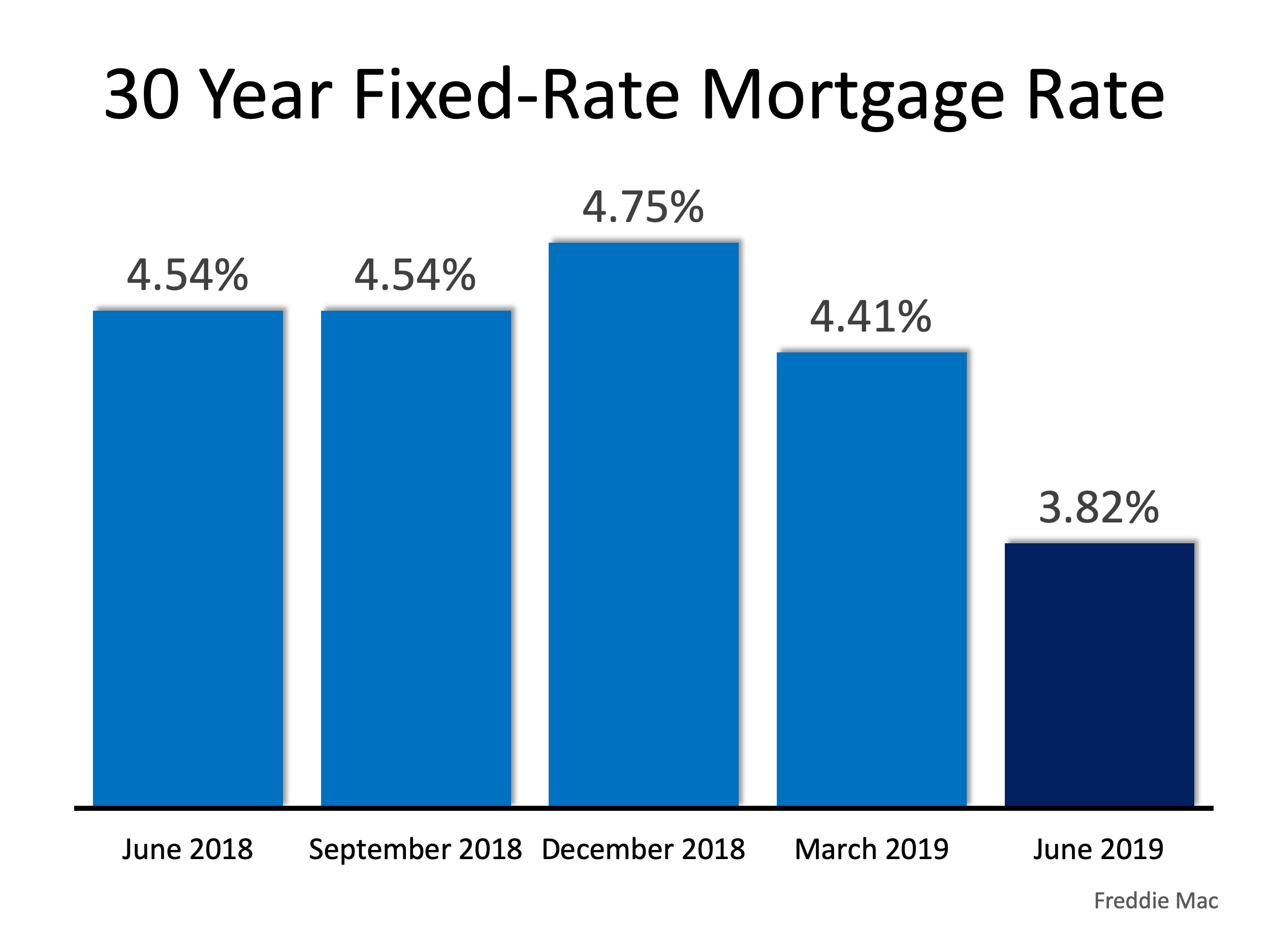
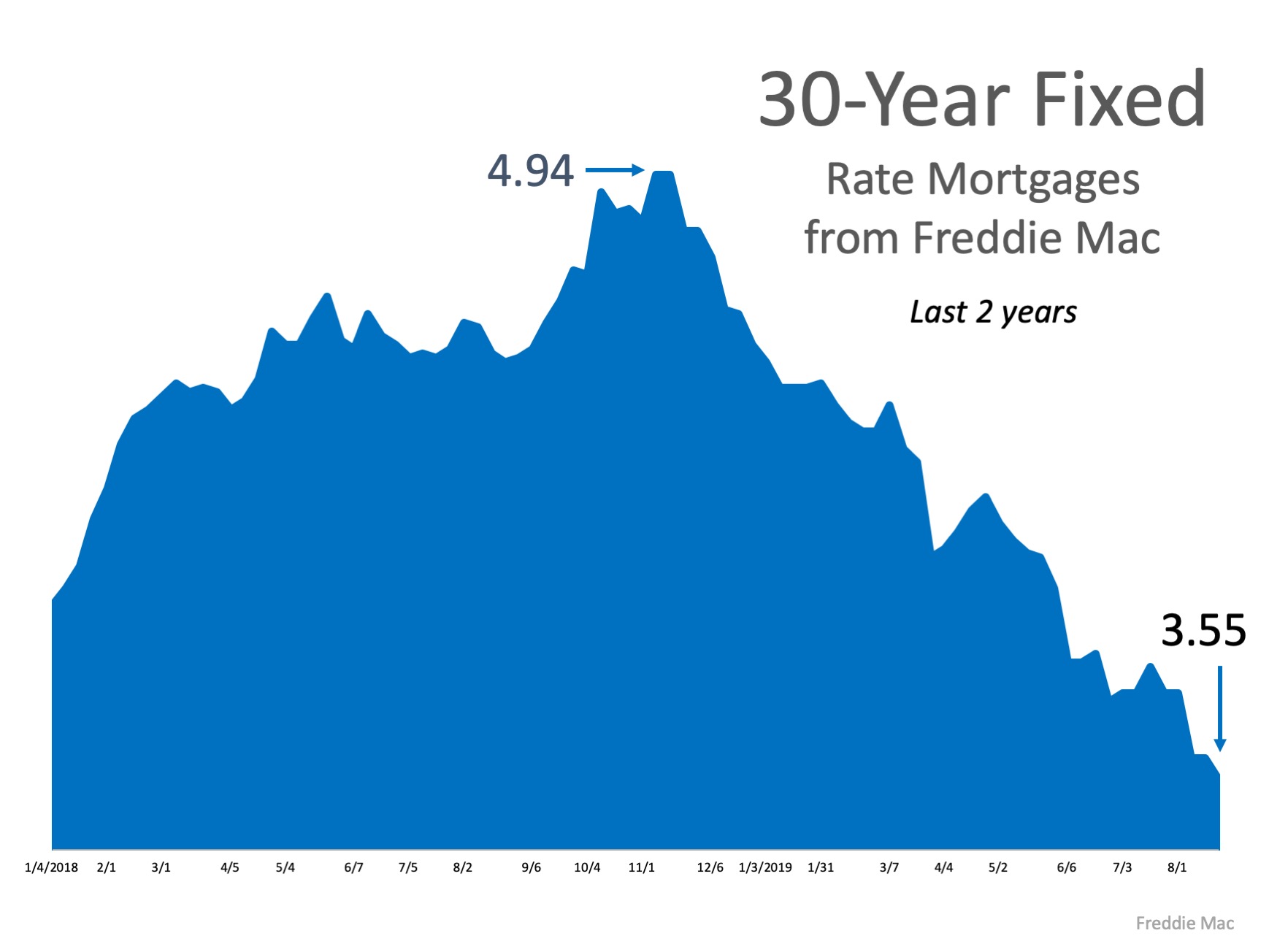
Mortgage rates have fallen by over a full percentage point since Q4 of 2018, settling at near-historic lows. This is big news for buyers looking to get more for their money in the current housing market.
What’s the Latest on Interest Rates? | Simplifying The Market
According to Freddie Mac’s Primary Mortgage Market Survey,

“the 30-year fixed-rate mortgage (FRM) rate averaged 3.60 percent, the lowest it has been since November 2016.”

Sam Khater, Chief Economist at Freddie Mac, notes how this is great news for homebuyers. He states,

“…consumer sentiment remains buoyed by a strong labor market and low rates that will continue to drive home sales into the fall.”

As a potential buyer, the best thing you can do is work with a trusted advisor who can help you keep a close eye on how the market is changing. Relying on current expert advice is more important than ever when it comes to making a confident and informed decision for you and your family.

Bottom Line

Even a small increase (or decrease) in interest rates can impact your monthly housing cost. If buying a home is on your short list of goals to achieve, let’s get together to determine your best move.

Content previously posted on Keeping Current Matters

The post What’s the Latest on Interest Rates? appeared first on Kelly Right Real Estate.

https://ift.tt/2ZnjLcv

Experts Predict a Strong Housing Market for the Rest of 2019

Experts Predict a Strong Housing Market for the Rest of 2019 | Simplifying The Market

We’re in the back half of the year, and with a decline in interest rates as well as home price and wage appreciation, many are wondering what the predictions are for the remainder of 2019.

Here’s what some of the experts have to say:

Ralph McLaughlin, Deputy Chief Economist for CoreLogic

“We see the cooldown flattening or even reversing course in the coming months and expect the housing market to continue coming into balance. In the meantime, buyers are likely claiming some ground from what has been seller’s territory over the past few years. If mortgage rates stay low, wages continue to grow, and inventory picks up, we can expect the U.S. housing market to further stabilize throughout the remainder of the year.”

Lawrence Yun, Chief Economist at NAR

“We expect the second half of year will be notably better than the first half in terms of home sales, mainly because of lower mortgage rates.”

Freddie Mac

“The drop in mortgage rates continues to stimulate the real estate market and the economy. Home purchase demand is up five percent from a year ago and has noticeably strengthened since the early summer months…The benefit of lower mortgage rates is not only shoring up home sales, but also providing support to homeowner balance sheets via higher monthly cash flow and steadily rising home equity.”

Bottom Line

The housing market will be strong for the rest of 2019. If you’d like to know more about our specific market, let’s get together to discuss what’s happening in our area.

Content previously posted on Keeping Current Matters

The post Experts Predict a Strong Housing Market for the Rest of 2019 appeared first on Kelly Right Real Estate.

https://ift.tt/323fwzt

Seniors Are on the Move in the Real Estate Market

Seniors Are on the Move in the Real Estate Market | Simplifying The Market

Did you know August 21st is National Senior Citizens Day? According to the United States Census, we honor senior citizens today because,

 “Throughout our history, older people have achieved much for our families, our communities, and our country. That remains true today and gives us ample reason…to reserve a special day in honor of the senior citizens who mean so much to our land.”

To give proper recognition, we’re going to look at some senior-related data in the housing industry.

According to the Population Reference Bureau,

“The number of Americans ages 65 and older is projected to nearly double from 52 million in 2018 to 95 million by 2060, and the 65-and-older age group’s share of the total population will rise from 16 percent to 23 percent.”

Seniors Believe in Homeownership

In a recent report, Freddie Mac compared the homeownership rates of two groups of seniors: the Good Times Cohort (born from 1931-1941) and the Previous Generations (born in the 1930s). The data shows an increase in the homeownership rate for the Good Times Cohort because seniors are now aging in place, living longer, and maintaining a high quality of life into their later years.Seniors Are on the Move in the Real Estate Market | Simplifying The MarketThis, however, does not mean all seniors are staying in place. Some are actively buying and selling homes. In the 2019 Home Buyers and Sellers Generational Trends Report, the National Association of Realtors® (NAR) showed the percentage of seniors buying and selling:Seniors Are on the Move in the Real Estate Market | Simplifying The Market

Here are some highlights from NAR’s report:

  • Buyers ages 54 to 63 had higher median household incomes and were more likely to be married couples.
  • 12% of buyers ages 54 to 63 are first-time homebuyers, 5% (64 to 72), and 4% (73 to 93).
  • Buyers ages 54 to 63 purchased because of an interest in being closer to friends and families, job relocation, and the desire to own a home of their own.
  • Sellers 54 years and older often downsized and purchased a smaller, less expensive home than the one they sold.
  • Sellers ages 64 to 72 lived in their homes for 21 years or more.

Bottom Line

According to NAR’s report, 58% of buyers ages 64 to 72 said they need help from an agent to find the right home. The transition from a current home to a new one is significant to undertake, especially for anyone who has lived in the same house for many years. If you’re a senior thinking about the process, let’s get together to help you make the move as smoothly as possible.

Content previously posted on Keeping Current Matters

The post Seniors Are on the Move in the Real Estate Market appeared first on Kelly Right Real Estate.

https://ift.tt/2HiRdG5

Housing Supply Not Keeping Up with Population Increase

Housing Supply Not Keeping Up with Population Increase | Simplifying The Market

Many buyers are wondering where to find houses for sale in today’s market. It’s a true dilemma. We see an increase in buyer demand, but the supply available for purchase isn’t keeping up.

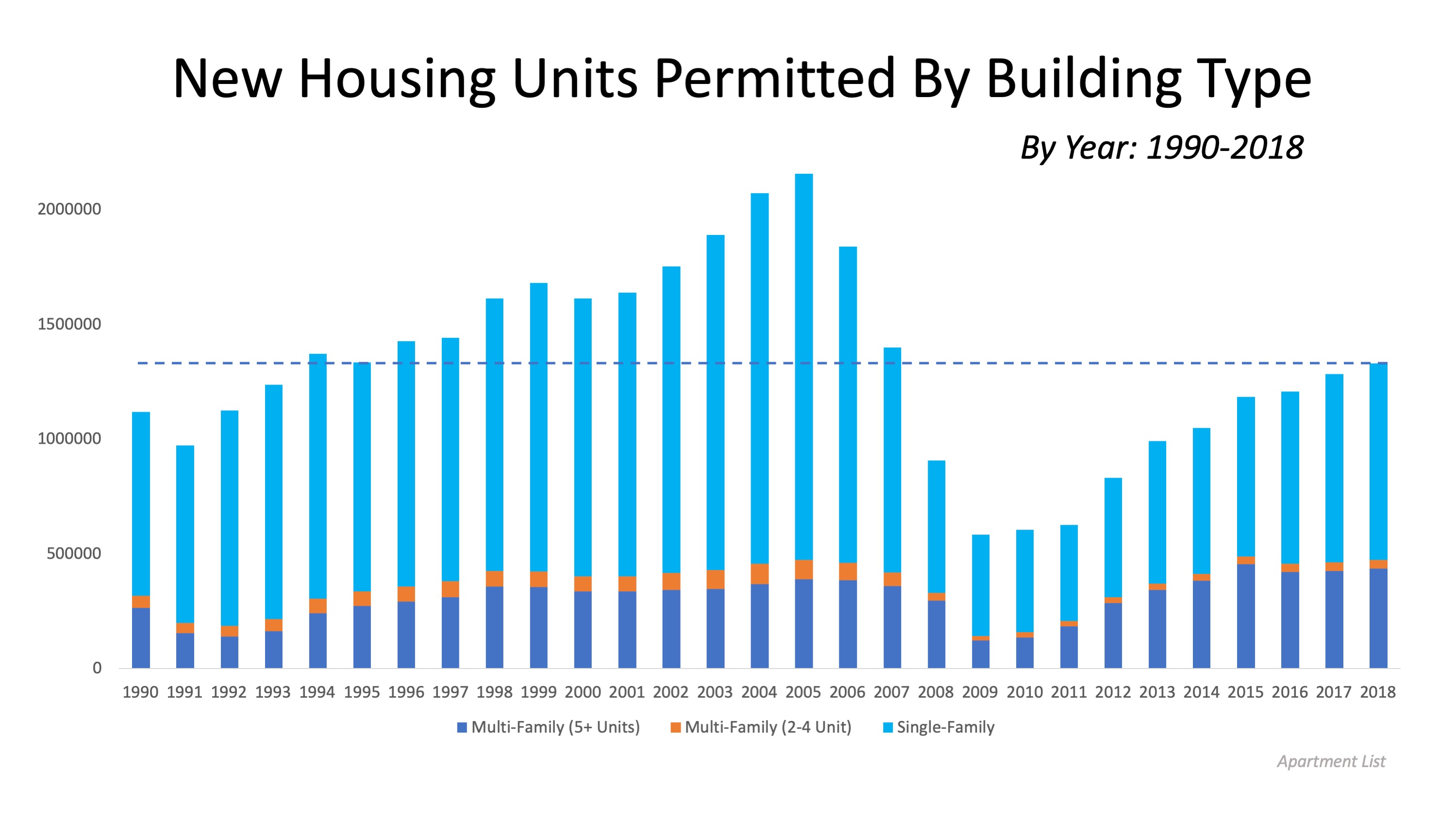
The number of new housing permits issued prior to the great recession increased for 15 years until 2005 (from 1.12 million in 1990 to a pre-recession peak of 2.16 million in 2005). According to Apartment List,

“From 1990 to 2005, the number of single-family permits issued more than doubled, while the number of multi-family permits grew by 49 percent.”

When the housing market crashed, the number of new homes permitted decreased to its lowest level in 2009 (see below):Housing Supply Not Keeping Up with Population Increase | Simplifying The MarketSince then, supply and demand have been out of balance when it comes to new construction. According to the same report,

“Construction of single-family homes has recovered much more slowly — the number of single-family housing units permitted in 2018 was barely half the number permitted in 2005.”

Why is new construction so important?

As the U.S. population increases, there is also an increase in the need for new homes. Today, new construction is not keeping up with the increase in the nation’s population. The report continues:

“The total number of residential housing units permitted in 2018 was roughly the same as the number permitted in 1994, when the country’s population was 20 percent less than it is today.”

Essentially, the dip in home building coupled with the steadily increasing U.S. population means there is now a selling opportunity for homeowners willing to list their current houses.

Bottom Line

If you’re considering selling your home to move up, now is a great time to get a positive return on your investment in a market with high demand. Let’s get together to determine the specific options available for you and your family.

Content previously posted on Keeping Current Matters

The post Housing Supply Not Keeping Up with Population Increase appeared first on Kelly Right Real Estate.

https://ift.tt/2zbZgA0

A Great Way to Increase Your Family’s Net Worth

A Great Way to Increase Your Family’s Net Worth | Simplifying The Market

Every three years, the Federal Reserve conducts its Survey of Consumer Finances. Data is collected across all economic and social groups. The latest survey data covers 2013-2016.

The study revealed that the median net worth of a homeowner is $231,400 – a 15% increase since 2013. At the same time, the median net worth of renters decreased by 5% ($5,200 today compared to $5,500 in 2013).

These numbers reveal that the net worth of a homeowner is over 44 times greater than that of a renter.

Owning a home is a great way to build family wealth.

As we’ve said before, simply put, homeownership is a form of ‘forced savings.’ Every time you pay your mortgage, you are contributing to your net worth by increasing the equity in your home.

That is why Gallup reported Americans picked real estate as the best long-term investment for the sixth year in a row. According to this year’s results, 35% of Americans chose real estate. Stocks followed at 27%, then savings accounts and gold.

Bottom Line

If you want to find out how you can use your monthly housing cost to increase your family’s wealth, let’s get together to help you through the process.

Content previously posted on Keeping Current Matters

The post A Great Way to Increase Your Family’s Net Worth appeared first on Kelly Right Real Estate.

https://ift.tt/2ZbkmZJ

Busting the Myth About a Housing Affordability Crisis

Busting the Myth About a Housing Affordability Crisis | Simplifying The Market

It seems you can’t find a headline with the term “housing affordability” without the word “crisis” attached to it. That’s because some only consider the fact that residential real estate prices have continued to appreciate. However, we must realize it’s not just the price of a home that matters, but the price relative to a purchaser’s buying power.

Homes, in most cases, are purchased with a mortgage. The current mortgage rate is a major component of the affordability equation. Mortgage rates have fallen by over a full percentage point since December 2018. Another major piece of the affordability equation is a buyer’s income. The median family income has risen by 3.5% over the last year.

Let’s look at three different reports issued recently that reveal how homes are very affordable in comparison to historic numbers, and how they have become even more affordable over the past several months.

1. National Association of Realtors’ (NAR) Housing Affordability Index:

Here is a graph showing the index going all the way back to 1990. The higher the column, the more affordable homes are:Busting the Myth About a Housing Affordability Crisis | Simplifying The MarketWe can see that homes are less affordable today (the green bar) than they were during the housing crash (the red bars). This was when distressed properties like foreclosures and short sales saturated the market and sold for massive discounts. However, homes are more affordable today than at any time from 1990 to 2008.

NAR’s report on the index also shows that the percentage of a family’s income needed for a mortgage payment (16.5%) is dramatically lower than last year and is well below the historic norm of 21.2%.Busting the Myth About a Housing Affordability Crisis | Simplifying The Market

2. Black Knight’s Mortgage Monitor:

This report reveals that as a result of falling interest rates and slowing home price appreciation, affordability is the best it has been in 18 months. Black Knight Data & Analytics President Ben Graboske explains:

“For much of the past year and a half, affordability pressures have put a damper on home price appreciation. Indeed, the rate of annual home price growth has declined for 15 consecutive months. More recently, declining 30-year fixed interest rates have helped to ease some of those pressures, improving the affordability outlook considerably…And despite the average home price rising by more than $12K since November, today’s lower fixed interest rates have worked out to a $108 lower monthly payment…Lower rates have also increased the buying power for prospective homebuyers looking to purchase the average-priced home by the equivalent of 15%.”

3. First American’s Real House Price Index:

While affordability has increased recently, Mark Fleming, First American’s Chief Economist explains:

“If the 30-year, fixed-rate mortgage declines just a fraction more, consumer house-buying power would reach its highest level in almost 20 years.”

Fleming goes on to say that the gains in affordability are about mortgage rates and the increase in family incomes:

“Average nominal household incomes are nearly 57 percent higher today than in January 2000. Record income levels combined with mortgage rates near historic lows mean consumer house-buying power is more than 150 percent greater today than it was in January 2000.”

Bottom Line

If you’ve put off the purchase of a first home or a move-up home because of affordability concerns, you should take another look at your ability to purchase in today’s market. You may be pleasantly surprised!

Content previously posted on Keeping Current Matters

The post Busting the Myth About a Housing Affordability Crisis appeared first on Kelly Right Real Estate.

https://ift.tt/2HaIAxc

How Property Taxes Can Impact Your Mortgage Payment

When buying a home, taxes are one of the expenses that can make a significant difference in your monthly payment. Do you know how much you...